The Prince of Wales joins a special episode of BBC Radio 1’s ‘Life Hacks’ to discuss male mental health and suicide prevention
Content advisory: this article discusses themes of suicide.
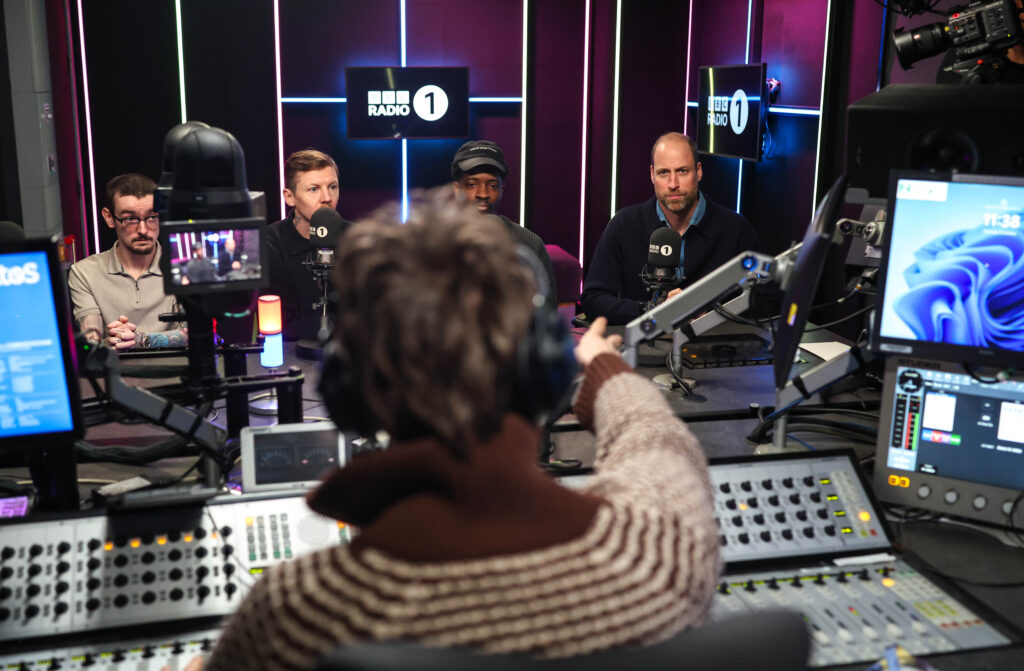
The Prince of Wales has called for more open conversations around male mental health and suicide during a special episode of Life Hacks on BBC Radio 1 today. The episode, hosted by presenter Greg James and now available on BBC Sounds, brings together a diverse panel with personal and professional experience of mental health challenges, offering practical advice, lived insight and, above all, a message of hope.
Prince William appears alongside guests including Allan Brownrigg, Director of Clinical Services at James’ Place – a charity which offers free, life-saving therapy to men in suicidal crisis – and Nathan, a young man the charity has helped. Musician and mental health advocate Professor Green also appears, sharing his lived experience of losing both his father and uncle to suicide, while rapper and broadcaster Guvna B, known for championing honest discussions about mental health, completes the panel.
Suicide remains the leading cause of death for men under 50 in the UK. Opening the discussion, The Prince comments that male suicide is a topic that “we’re not very good at talking about”, highlighting the need for greater awareness and more open conversations that confront stigma and encourage help-seeking.
Last October, The Prince and The Royal Foundation launched the National Suicide Prevention Network, a four nations initiative designed to transform how suicide is understood and prevented across the UK. The Life Hacks episode, on a major national platform, reflects that mission: to make it easier for people to speak up, seek help, and support those around them. James’ Place is one of the founding partners of the Network and Prince William has long supported the organisation’s work in supporting men in suicidal crisis.
A central theme of the discussion is the importance of creating safe spaces for open, judgment‑free conversations, particularly among men who can feel pressure to stay silent about their emotions. Drawing on his clinical experience at James’ Place, Allan offers clear, actionable advice: start with simple check‑ins, ask open questions, and revisit the conversation if someone seems withdrawn or unlike themselves.
The Prince agrees, adding that young men in particular can often feel they need permission to talk about their emotions. Hearing these conversations publicly, from people with different backgrounds and experiences, can help demonstrate that permission is not needed.
Each guest also reflects on their own experiences and what had motivated them to become part of the national conversation on suicide prevention and mental health. The Prince shares how his time as an emergency responder exposed him to difficult and deeply-traumatic scenes, and how absorbing some of that over time had inevitably affected his own mental wellbeing and why he remains committed to supporting the emergency responder community. Nathan, meanwhile, shares his own journey, offering a powerful reminder that the act of reaching out for help can be a life‑changing one.
The panel also explores the idea of a personal “toolbox” for mental wellbeing: simple, everyday strategies that help individuals understand their own emotions, recognise warning signs and seek help early. This toolbox might include checking in with trusted people, practising habits that support emotional and physical health, or knowing where to turn to for professional help. The panel stresses that people should not expect to have all the answers on their own and that not having the answers is okay: what matters is knowing where to turn.
During the episode, The Prince of Wales also reiterates his longstanding commitment to helping people, especially young men, feel able to speak openly about their mental health. Through initiatives like the National Suicide Prevention Network, he aims to encourage more people to take notice of those around them, check in, and seek help when needed.
Throughout the conversation, the message is consistent: hope and support are always available, and reaching out – whether to a friend, colleague, family member or professional service – can make all the difference.
The episode is available now on BBC Sounds: https://www.bbc.co.uk/sounds/play/m002rh7v
If you have been affected by any of the issues raised in this story, information and support can be found at the Hub of Hope, the UK’s largest mental health support directory: https://hubofhope.co.uk/ and through Blue Lights Together for support for the emergency responder community: Blue Light Together – Blue Light Card Foundation